 [email protected]
 +86 18006010205



-
Spieth, Space solutionsMore Than 18 Years Manufacturing & Exporting
-
 Time:6/17/2026
 -
 Time:6/15/2026
 -
 Time:6/11/2026
-
 Tel : +86 18006010205
-
 E-mail : [email protected]
-
 Address : Tongan Park, Tongan District, Xiamen, China 361023
Wire Mesh Container Buying Guide: Load Capacity, Size & Durability
 Time:6/22/2026
 8
8Industrial selection guide for warehouse storage, logistics handling, and export packaging.
Focus on durability, stacking safety, and real warehouse performance — not just price.
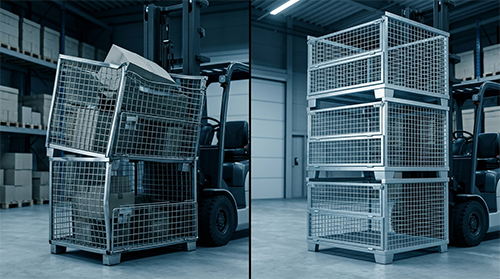
⚖️ Load Capacity Reality ???? Rated Load vs Real Warehouse Load
❌ Cheap Container (Marketing Spec)
• 1000kg “max load” only
• No UDL standard
• Weak corner welding
• Deforms under uneven load
✅ Industrial Container (Real Use)
• UDL tested structure
• Reinforced bottom frame
• Forklift impact resistant
• Stable long-term stacking
???? Size Standardization
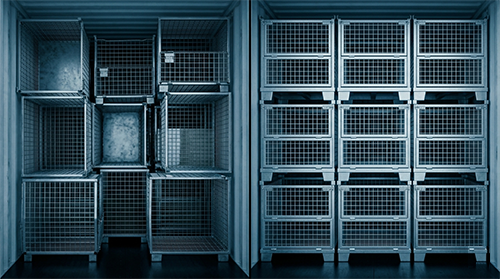
???? Standard Size vs Non-Standard Waste
1200 × 1000 mm = Global Warehouse Standard
Optimized for pallet systems, sea freight containers, and rack compatibility.
❌ Non-standard size
• Shipping space wasted
• Poor pallet match
• Higher logistics cost
✅ Standard size
• Efficient container loading
• Global compatibility
• Reduced freight cost
???? Wire Diameter & Mesh Structure
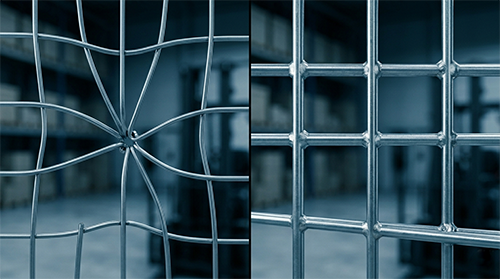
Wire Thickness = Structural Strength
Wire Diameter Industrial Meaning Use Case 3.0mm Light duty Low-cost storage 4.0mm Medium duty General warehouse 4.5–5.0mm Heavy duty Industrial logistics ???? Mesh Grid Selection 50×100 mm → General warehouse use Small grid → Small parts / anti-drop Open mesh → airflow for fresh goods
???? Stackability
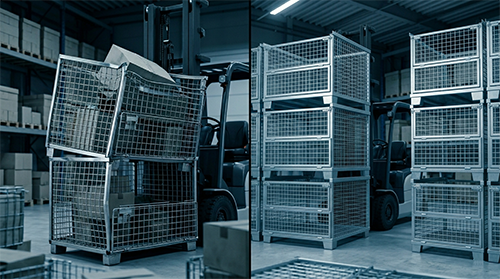
Stacking Performance = Warehouse Cost Control
Better stacking = lower warehouse rental cost per pallet position
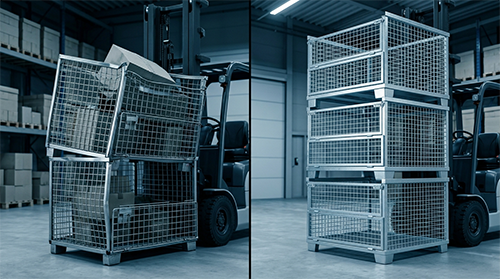
❌ Weak Stack Design
• 1–2 layers only
• Tilting risk
• Frame deformation
✅ Industrial Stack System
• 3+ layer stable stacking
• Reinforced corner posts
• Forklift safe handling
????️ Surface Treatment ???? Galvanized Comparison
Electro-Galvanized
• Low cost
• Indoor use only
• Rust risk in humidity
Hot-Dip Galvanized
• High corrosion resistance
• Coastal / cold storage use
• Long service life

???? Application Matrix
Wire Mesh Container Selection Matrix
Application Recommended Type E-commerce warehouse Foldable mesh container Cold storage Hot-dip galvanized Export logistics Standard 1200×1000mm Automotive parts Heavy-duty reinforced Agriculture Ventilated mesh design
⚠️ Common Mistakes
⚠️ Avoid These Purchasing Mistakes
• Choosing only based on price
• Ignoring surface treatment environment
• Using non-standard sizes for export shipping
• Underestimating stacking requirements
???? VS SUMMARY BLOCK
Industrial vs Low-Cost Wire Mesh Container
This is the key difference that determines warehouse efficiency
Feature Industrial Grade Low-Cost Product Load structure UDL tested Marketing rating only Wire thickness 4.0–5.0mm 3.0mm thin wire Stackability 3+ layers stable 1–2 layers risky Surface Hot-dip galvanized Thin electro coating
❓ FAQ
Q1: What is the standard size for wire mesh containers?
1200×1000 mm is the most widely used global logistics standard.
Q2: Can they be stacked fully loaded?
Yes, industrial-grade models support stable multi-layer stacking.
Q3: What surface treatment is best for humid areas?
Hot-dip galvanized is recommended for coastal or cold storage environments.
-
-
PRODUCTS
-
NEWS
-
FOLLOW US
-


 link:
Spieth Medical
link:
Spieth Medical


 if you have questions or suggestions,please leave us a message,we will reply you as soon as we can



-

-
 +86 18006010205
 -
 +86 18006010205
 0
0