 [email protected]
 +86 18006010205



-
Spieth, Space solutionsMore Than 18 Years Manufacturing & Exporting
-
 Time:7/24/2026
 -
 Time:7/22/2026
 -
 Time:7/21/2026
 -
 Time:7/16/2026
 -
 Time:7/14/2026
-
 Tel : +86 18006010205
-
 E-mail : [email protected]
-
 Address : Tongan Park, Tongan District, Xiamen, China 361023
Boltless Rivet Shelving: The Ultimate TCO Guide for Warehouses
 Time:6/9/2026
 222
222
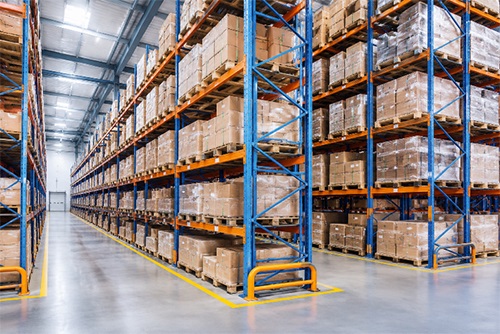
In the world of warehousing and logistics, heavy-duty pallet racks often grab most of the industry spotlight. However, there is a certain product category that looks deceptively simple, yet silently supports tens of thousands of small-and-medium warehouses, e-commerce fulfillment centers, and retail backrooms worldwide. It achieves this through an exceptional Return on Investment (ROI) and unparalleled operational flexibility.
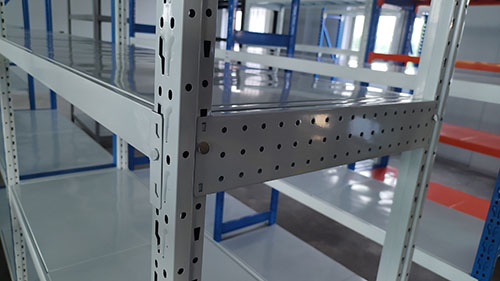
This is Butterfly Hole Rivet Shelving (widely known in global markets as Boltless Rivet Shelving or Medium-Duty Industrial Shelving). As an industry insider in the international racking market, I frequently notice overseas buyers incurring unnecessary capital expenditures (CapEx) by blindly pursuing heavy-duty structural pallet racks when expanding their facilities. Today, drawing from real-world warehouse optimizations and global export data, I would like to break down the true commercial value and Total Cost of Ownership (TCO) of butterfly hole shelving.
What is Butterfly Hole Shelving? What is Its Core Mechanism?
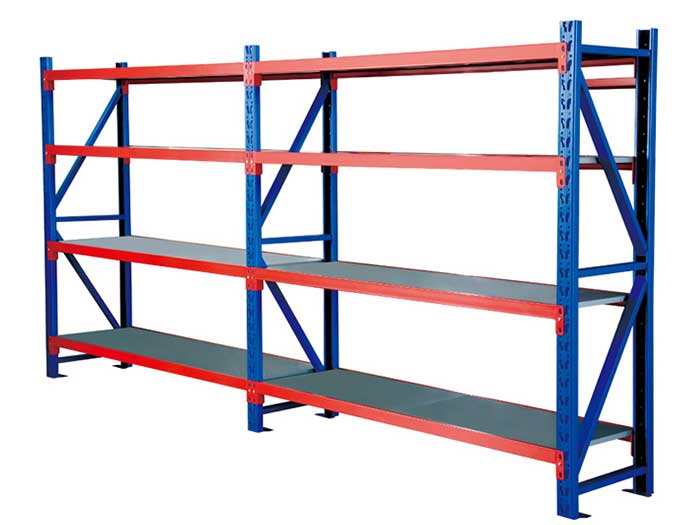
Butterfly hole shelving gets its name from the distinctive butterfly-wing-shaped slots stamped into the heavy-duty upright posts. Its ultimate commercial value lies in its 100% Boltless & Self-Locking Design. The physics behind it are incredibly ingenious: the rivets or tapered connectors at both ends of the beam are inserted directly into the butterfly holes of the uprights. These slots are precision-engineered to be wider at the top and narrower at the bottom.
Where Is It Indispensable? 4 Key Application Scenes
1. E-commerce Fulfillment Centers
E-commerce warehousing is defined by massive SKU counts, high-frequency manual order picking, and sharp seasonal inventory fluctuations. Boltless rivet shelving allows for tool-free shelf height adjustments at a 50mm or 75mm pitch (approx. 2-inch or 3-inch increments) to match varying carton sizes. It integrates seamlessly with plastic tote bins or carton flow rails, allowing operations managers to quickly reconfigure highly efficient picking zones.
2. Industrial Parts & Automotive Aftermarket Warehouses
Hardware, auto parts, and electronic components come in all shapes, weights, and sizes. Not only is the layer height highly adjustable, but users can also choose from steel panels, premium MDF/particle boards, or wire decking between the beams. This adaptability provides excellent visual clarity, which is highly beneficial for manual stock-taking and rapid retrieval.
3. Retail Backrooms & Front-of-Store Displays
In pharmacies, supermarkets, and hardware chains, this shelving serves a dual purpose: backroom stock inventory and front-of-store product displays. Finished with a high-grade electrostatic epoxy powder coating, it offers a smooth, clean aesthetic. With a stable load capacity of 200–500 kg (approx. 440–1,100 lbs) per level, it perfectly balances aesthetics with industrial utility.
4. Line-side Staging & Mezzanine Understructures
Due to its exceptional structural stability under multi-directional stress, it is frequently used as the foundational support for multi-tier, rack-supported mezzanines, or as temporary line-side staging racks in manufacturing plants to adapt to high-frequency assembly line adjustments.
Head-to-Head: Rivet Shelving vs. Traditional Bolted Shelving
To understand why global procurement managers are shifting away from traditional hardware, look at the structural comparison below:
| Commercial Metric | Butterfly Hole Rivet Shelving | Traditional Bolted Shelving |
|---|---|---|
| Required Tools | Rubber Mallet Only ???? | Wrenches, Screws & Bolts ???? |
| Assembly Time | ~30 Seconds | 5 to 10 Minutes |
| Loading Density | 15% – 20% Higher (Flat-pack) | Lower (Bulkier welded pieces) |
| Safety Profile | 100% Snag-Free (Smooth flush) | Exposed hardware risks tearing cargo |
| Relocation Flexibility | 100% Damage-Free Disassembly | High risk of stripped threads |
Why International Buyers and Distributors Prefer It
The Bottom Line: Butterfly hole rivet shelving is by no means a "low-end" alternative. It is one of the most mature, standardized, and commercially proven solutions in the global material handling sector. Its essence lies in using the most streamlined engineering structure to unleash the maximum spatial and fiscal efficiency.
Ready to Optimize Your Warehouse Layout?
Planning an expansion, setting up a fulfillment hub, or looking to import as a distributor? Get your free weight-loading spec guide and direct factory landing quotation.
Download Spec Guide & Get Quote-
-
PRODUCTS
-
NEWS
-
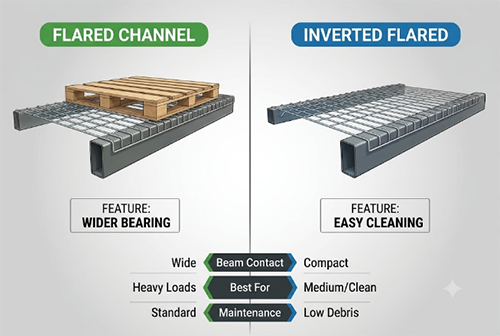
Flared vs Inverted Flared Wire Decking for Pallet Racks
24 JUL 2026
-
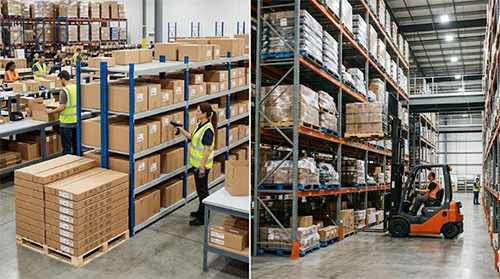
Split vs Solid Posts in Boltless Rivet Shelving
22 JUL 2026
-
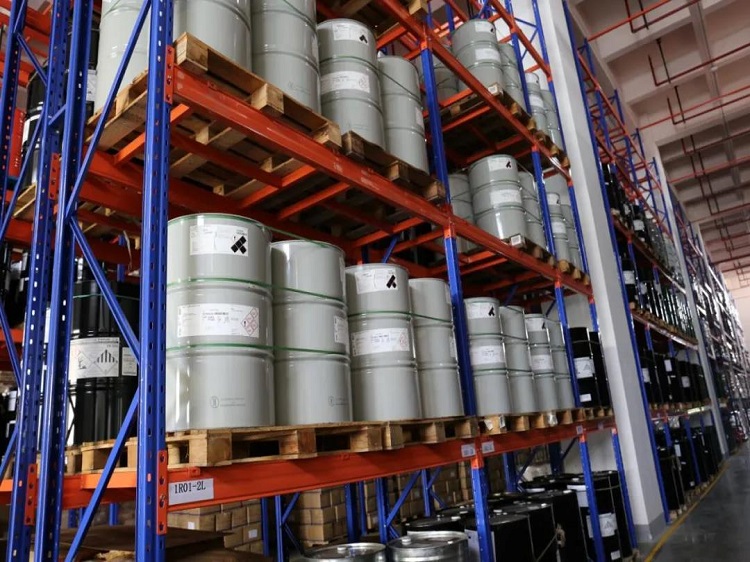
Understanding Pallet Rack Load Capacity
21 JUL 2026
-
Flared vs Inverted Flared Wire Decking for Pallet Racks
-
FOLLOW US
-


 link:
Spieth Medical
link:
Spieth Medical


 if you have questions or suggestions,please leave us a message,we will reply you as soon as we can



-

-
 +86 18006010205
 -
 +86 18006010205
 0
0