 [email protected]
 +86 18006010205



-
Spieth, Space solutionsMore Than 18 Years Manufacturing & Exporting
-
 Time:7/13/2026
 -
 Time:7/10/2026
 -
 Time:7/6/2026
-
 Tel : +86 18006010205
-
 E-mail : [email protected]
-
 Address : Tongan Park, Tongan District, Xiamen, China 361023
Warehouse Racking Safety Risk Guide
 Time:1/22/2026
 240
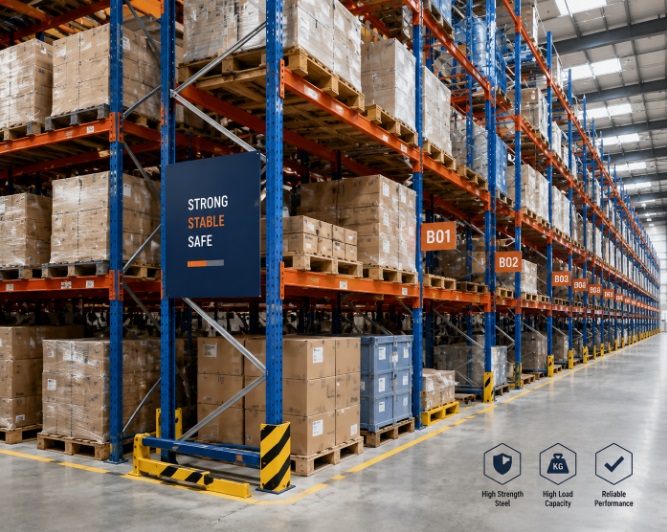
240Warehouse racking systems are designed to maximize storage capacity and improve operational efficiency. However, when safety risks are overlooked, racking systems can become a serious hazard to workers, inventory, and overall business continuity.
Racking failures can result in injuries, damaged goods, operational downtime, and legal liabilities. This guide provides a comprehensive overview of common warehouse racking safety risks and practical measures to reduce them, helping warehouse managers and safety professionals build safer and more reliable storage environments.
Understanding Warehouse Racking Systems
Warehouse racking systems vary widely in design and application. Common systems include selective pallet racking, drive-in and drive-through racking, push-back racking, pallet flow racking, radio shuttle systems, and mezzanine-supported racking structures.
Each system introduces unique safety considerations. High-density systems increase load concentration, automated systems reduce human interaction but add mechanical risks, and mezzanine structures introduce elevated working areas. Understanding the system in use is the foundation of effective risk management.
Common Warehouse Racking Safety Risks
Overloading and Incorrect Load Distribution
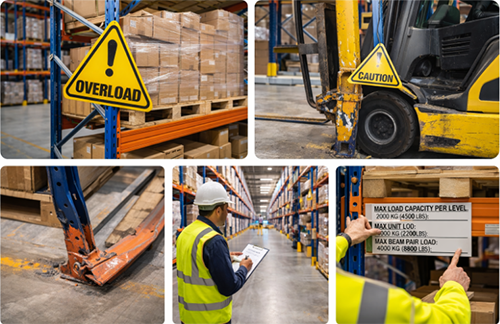
Overloading is one of the leading causes of racking failure. Exceeding rated load capacities places excessive stress on uprights, beams, and anchors, increasing the risk of collapse.
Improper load distribution, such as uneven pallet placement or stacking heavier goods on upper levels, further compromises structural stability. Clear load ratings and consistent pallet standards are essential to preventing these risks.
Forklift and Equipment Impact Damage
Forklift collisions with racking uprights and beams are a common but often underestimated hazard. Even minor impacts can weaken structural components without visible signs of damage.
Repeated impacts accumulate over time, reducing the racking system’s ability to safely support loads. Without protective measures and proper operator training, impact damage remains a significant long-term safety risk.
Improper Installation and Assembly
Racking systems that are incorrectly installed pose immediate safety concerns. Missing anchor bolts, misaligned uprights, or uneven floor conditions can all compromise load-bearing performance.
Using incompatible components or mixing parts from different manufacturers further increases the risk of structural failure. Professional installation and strict adherence to manufacturer specifications are critical.
Damaged or Worn Racking Components
Bent uprights, deformed beams, and corroded components reduce a racking system’s structural integrity. These issues often develop gradually and may go unnoticed during daily operations.
Ignoring minor damage can lead to sudden failure under normal load conditions. Damaged components should be evaluated promptly and repaired or replaced as needed.
Inadequate Training and Human Error
Human error remains a major contributor to warehouse accidents. Inadequate training can lead to unsafe loading practices, improper forklift operation, and failure to report visible damage.
Without a strong safety culture, even well-designed racking systems are vulnerable to misuse and neglect.
Key Safety Regulations and Standards
Warehouse racking safety is governed by regional and international standards. Common references include ANSI and RMI guidelines in North America, EN 15635 in Europe, and occupational safety regulations such as OSHA requirements.
These standards define load ratings, inspection procedures, and maintenance responsibilities. Compliance not only improves safety but also demonstrates due diligence and reduces liability exposure.
Racking Inspection and Maintenance Practices
Routine Visual Inspections
Regular visual inspections help identify early signs of damage, such as bent uprights, loose anchors, or displaced beams. These checks should be conducted by trained personnel as part of daily or weekly routines.
Immediate action should be taken when critical damage is detected.
Professional Safety Inspections
Periodic inspections by qualified professionals provide a deeper assessment of structural condition and compliance. Inspection reports should document damage severity, recommended actions, and timelines for corrective measures.
Maintenance and Repair Best Practices
Repairs should always use approved components from the original manufacturer. Temporary fixes or unauthorized modifications can compromise safety and void compliance.
In some cases, replacing damaged components is safer and more cost-effective than attempting repairs.
Best Practices to Reduce Warehouse Racking Safety Risks
Correct Rack Design and System Selection
Racking systems must be designed based on actual load characteristics, pallet dimensions, and handling equipment. Adequate aisle width, floor capacity, and seismic considerations should be included at the design stage.
A well-matched system significantly reduces operational risks.
Load Management and Clear Labeling
Visible load rating labels help prevent overloading and improper stacking. Standardized pallet weights and consistent loading practices support safe day-to-day operations.
Clear labeling improves accountability and reduces reliance on operator judgment alone.
Forklift Traffic Management and Protection
Defined traffic routes, speed limits, and designated pedestrian zones reduce collision risks. Rack protectors, upright guards, and end-of-aisle barriers provide additional protection against accidental impacts.
These measures are especially important in high-traffic warehouses.
Employee Training and Safety Culture
Regular training ensures that employees understand load limits, proper handling techniques, and reporting procedures. Encouraging workers to report damage without fear of blame helps identify risks before they escalate.
A proactive safety culture is one of the most effective risk control tools.
Safety Considerations for High-Density and Automated Racking Systems
High-density systems such as drive-in racking and radio shuttle systems increase storage efficiency but also concentrate loads. Precise system alignment, strict operating procedures, and reliable monitoring systems are essential.
Automated systems reduce human exposure but require clear safety protocols for maintenance and emergency intervention.
Emergency Response and Incident Management
In the event of a racking incident, immediate area isolation is critical. Affected racks should be unloaded and inspected before being returned to service.
Incident analysis helps identify root causes and prevent recurrence, strengthening overall safety performance.
Conclusion: Building a Safer Warehouse Racking Environment
Warehouse racking safety is not achieved through a single measure but through a combination of proper design, regular inspection, employee training, and regulatory compliance.
By understanding common safety risks and implementing best practices, businesses can protect their workforce, inventory, and operations while maximizing the long-term value of their racking systems. A safe warehouse is ultimately a more efficient and resilient one.
-
-
PRODUCTS
-
NEWS
-
FOLLOW US
-


 link:
Spieth Medical
link:
Spieth Medical


 if you have questions or suggestions,please leave us a message,we will reply you as soon as we can



-

-
 +86 18006010205
 -
 +86 18006010205
 0
0