 [email protected]
 +86 18006010205



-
Spieth, Space solutionsMore Than 18 Years Manufacturing & Exporting
-
 Time:7/6/2026
 -
 Time:6/24/2026
-
 Tel : +86 18006010205
-
 E-mail : [email protected]
-
 Address : Tongan Park, Tongan District, Xiamen, China 361023
Which Industries Are Best Suited for Shuttle Rack Systems
 Time:7/8/2026
 5
5
For many warehouses, expansion is no longer the only solution to increasing storage capacity.
Limited warehouse space, rising labor costs, and growing inventory pressure are common challenges faced by manufacturers, distributors, and logistics operators. Instead of building a larger facility, many companies are improving warehouse efficiency through high-density storage solutions.
A shuttle rack system combines deep-lane pallet storage with automated shuttle vehicles to maximize storage density, reduce forklift movement inside aisles, and improve warehouse throughput.
Typical Space Utilization
Flexible Storage Management
Optimized Warehouse Capacity
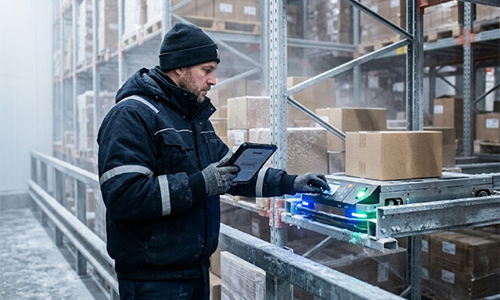
With typical space utilization rates of 75%–80%+ and significant reductions in manual handling requirements, shuttle racking is particularly suitable for industries that require:
- High storage density
- Large quantities of pallet storage
- Frequent pallet movement
- Strict inventory control
- FIFO or FILO operation modes
1. Food & Beverage Industry
The food and beverage industry is one of the most common applications for shuttle racking systems.
Products such as beverages, dairy products, frozen foods, and packaged ingredients usually involve:
Compared with traditional pallet racking, shuttle systems allow more pallets to be stored in deep lanes while maintaining efficient pallet retrieval.
The system can support both:
FIFO (First In, First Out) — commonly used for products with expiration dates
FILO (First In, Last Out) — suitable for bulk storage applications
Typical Application Parameters
- Pallet loads: 1,000–1,500 kg per position
- Rack depth: 20–40+ meters depending on warehouse design
- Storage capacity: thousands of pallet positions
- Operation mode: automatic pallet movement inside storage lanes
Example Application
A food manufacturer in Saudi Arabia upgraded its warehouse with a shuttle racking system to increase storage density while reducing forklift travel distance. The solution helped improve warehouse utilization and shorten pallet handling time during peak production periods.
2. Pharmaceutical Industry
Pharmaceutical warehouses require a higher level of inventory accuracy and traceability compared with general storage facilities.
Medicines often require:
Shuttle rack systems support organized pallet storage and can be integrated with warehouse management systems (WMS) to improve inventory visibility.
Typical Application Parameters
- High-density pallet storage
- Batch-based inventory management
- Integration with warehouse control systems
- Accurate pallet location tracking
Example Application
A pharmaceutical distribution center implemented a shuttle storage solution to improve pallet handling efficiency and strengthen batch traceability. The system helped reduce manual operations and supported stricter inventory management requirements.
3. Cold Chain Warehousing
Cold storage is one of the industries where shuttle racking provides significant advantages.
In refrigerated environments, every forklift movement means:
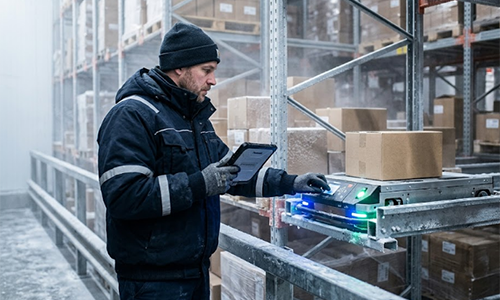
Because shuttle vehicles operate inside storage lanes, forklifts do not need to repeatedly enter deep storage areas.
This helps reduce unnecessary movement inside cold rooms and improves workplace safety.
Typical Application Parameters
- Operating temperature: suitable for chilled and frozen environments
- Reduced forklift activity inside cold areas
- Less door opening and cold air loss
- Longer continuous operation through dedicated battery systems
Example Application
A temperature-controlled warehouse in Dubai used shuttle racks for beverage and food storage. By minimizing forklift movement inside cold storage areas, the facility improved energy efficiency and reduced manual handling requirements.
4. Tobacco Industry
The tobacco industry requires highly organized storage because products are usually stored in large quantities with strict batch control.
Shuttle racking is suitable because it provides:
Compared with conventional selective pallet racking, shuttle systems can significantly increase storage density, especially when warehouses handle large volumes of similar products.
Typical Application Parameters
- Deep-lane storage exceeding 30 meters
- High pallet quantity per SKU
- Full pallet in/out operations
- Reduced aisle requirements
For tobacco manufacturers and distributors, shuttle systems provide a balance between storage capacity and operational efficiency.
5. E-commerce & FMCG Warehousing
E-commerce and FMCG businesses face a different challenge: inventory changes quickly.
High SKU variety, seasonal demand fluctuations, and frequent inbound/outbound operations require flexible storage solutions.
Shuttle racks are especially suitable for:
A single shuttle vehicle can serve multiple storage lanes, and additional shuttles can be added when warehouse throughput requirements increase.
Typical Application Parameters
- Flexible shuttle quantity expansion
- Support for peak-season demand increases
- Suitable for high-volume pallet movement
- Compatible with automated warehouse management systems
Other Industries Using Shuttle Rack Systems
Besides the industries mentioned above, shuttle racking is also widely used in:
Generally, industries with high pallet volumes and limited warehouse space are strong candidates for shuttle rack solutions.
Shuttle Rack System vs Traditional Pallet Racking
Choosing the right storage system depends on warehouse requirements, inventory characteristics, and operational goals. The following comparison shows the main differences between traditional pallet racking and shuttle racking systems.
| Comparison | Traditional Pallet Racking | Shuttle Racking System |
|---|---|---|
| Space Utilization | 30%–40% | 75%–80%+ |
| Forklift Movement | Frequent aisle operation and direct rack access | Reduced forklift entry into storage lanes |
| Storage Density | Limited by aisle space requirements | Deep-lane storage with higher pallet density |
| Labor Requirement | More forklift operators required for daily operations | Reduced manual handling and improved operational efficiency |
| Scalability | Warehouse layout changes may be required for expansion | Additional shuttle vehicles can be added as demand grows |
| Automation Level | Mainly manual forklift operation | Automated pallet movement inside storage lanes |
| Investment Level | Lower initial investment | Higher efficiency and long-term operational benefits |
When Is Shuttle Racking Not The Best Choice?
Although shuttle systems are highly efficient, they are not suitable for every warehouse.
A traditional pallet racking system may still be a better choice when:
Direct access to every pallet position is required.
High-density storage may not provide enough value.
A simpler storage solution may be more economical.
For warehouses with high-density storage requirements and repetitive pallet handling, shuttle racking usually provides better long-term value.
How To Decide If Your Warehouse Needs Shuttle Racking?
Before choosing a shuttle rack system, companies should evaluate several important factors:
A professional warehouse layout analysis can help determine whether shuttle racking is the right investment.
Final Thoughts
A shuttle rack system is not simply a replacement for traditional pallet racks. It is a warehouse optimization solution designed for companies that need more storage capacity, better efficiency, and improved control over pallet movement.
For warehouses facing limited space, increasing labor costs, or growing inventory pressure, the solution may not always be a bigger building — it may be a smarter storage system.
Looking For A Smarter Warehouse Storage Solution?
Our engineering team can help analyze your warehouse layout, pallet specifications, storage requirements, and operational goals to design a customized shuttle rack system.
Frequently Asked Questions About Shuttle Rack Systems
What industries commonly use shuttle rack systems?
Shuttle rack systems are widely used in food and beverage, pharmaceutical, cold chain, tobacco, FMCG, e-commerce, chemical, electronics, and manufacturing industries where high-density pallet storage is required.
What is the main advantage of shuttle racking compared with pallet racking?
The main advantage is higher storage density. Shuttle systems reduce the need for multiple aisles and allow deeper storage lanes while maintaining efficient pallet movement.
Can shuttle rack systems support FIFO operation?
Yes. Shuttle racking can support FIFO operation, making it suitable for industries such as food, beverage, and pharmaceuticals where expiration date management is important.
Is shuttle racking suitable for every warehouse?
No. Warehouses requiring direct access to every pallet position or handling a large number of individual SKUs may find selective pallet racking more suitable.
Your warehouse may not need more space — it may need a smarter way to use the space you already have.
-
-
PRODUCTS
-
NEWS
-
FOLLOW US
-


 link:
Spieth Medical
link:
Spieth Medical


 if you have questions or suggestions,please leave us a message,we will reply you as soon as we can



-

-
 +86 18006010205
 -
 +86 18006010205
 0
0