 [email protected]
 +86 18006010205



-
Spieth, Space solutionsMore Than 18 Years Manufacturing & Exporting
-
 Time:6/24/2026
 -
 Time:6/23/2026
-
 Tel : +86 18006010205
-
 E-mail : [email protected]
-
 Address : Tongan Park, Tongan District, Xiamen, China 361023
What Are OSHA Shelving Requirements for Warehouse Storage
 Time:1/5/2026
 1115
1115Warehouse shelving plays a critical role in daily operations, but it is also a common source of safety hazards when not properly designed, installed, or maintained. Collapsing shelves, falling materials, and overloaded racks can lead to serious injuries, costly downtime, and regulatory penalties.

Understanding OSHA shelving requirements for warehouse storage helps businesses create safer working environments while staying compliant with U.S. workplace safety regulations. This guide explains how OSHA approaches warehouse shelving, what requirements apply, and how to choose compliant shelving solutions for long-term safety and efficiency.
Why OSHA Shelving Requirements Matter in Warehouses
Warehouses handle heavy loads, high stacking heights, and constant equipment movement. Without proper shelving safety controls, risks increase significantly.
OSHA focuses on preventing:
-
Structural failure of shelving and racking
-
Falling objects from elevated storage
-
Injuries caused by overloading or improper use
-
Unsafe working conditions around storage systems
Compliance is not only about avoiding fines—it is about protecting workers, reducing accidents, and maintaining smooth warehouse operations.
What Is OSHA and How It Regulates Warehouse Shelving
The Occupational Safety and Health Administration (OSHA) is responsible for enforcing workplace safety standards in the United States. OSHA does not publish a single standard dedicated exclusively to warehouse shelving. Instead, shelving safety falls under OSHA General Industry Standards (29 CFR 1910).
OSHA regulates shelving through:
-
General duty requirements to provide a safe workplace
-
Structural stability and load handling rules
-
Proper use, installation, and maintenance expectations
In short, OSHA evaluates whether shelving systems are safe, stable, and used as intended—regardless of the shelving type.
General OSHA Shelving Requirements for Warehouse Storage
OSHA requires all warehouse shelving systems to be:
-
Structurally sound and stable
-
Capable of safely supporting intended loads
-
Used only for their designed purpose
-
Installed and maintained to prevent collapse or tipping
Shelving must not interfere with aisles, exits, or work areas, and stored materials must be placed securely to avoid falling hazards.
Load Capacity and Weight Distribution Requirements
One of the most critical OSHA-related factors is load capacity control.
Key principles include:
-
Shelving must never be overloaded
-
Weight should be evenly distributed across shelves or rack beams
-
Load ratings must be known and followed by warehouse staff
Although OSHA does not explicitly mandate load labels in all cases, inspectors commonly cite missing or ignored load capacities as violations. Clear load limits help prevent structural damage and reduce accident risks.
Height, Anchorage, and Structural Stability Rules
As shelving height increases, so does the risk of instability. OSHA places strong emphasis on preventing tipping and collapse, especially in high-bay warehouse environments.
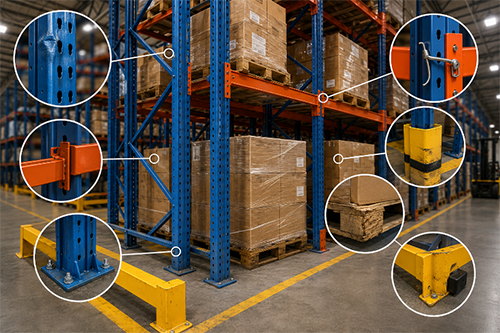
Best practices aligned with OSHA requirements include:
-
Anchoring tall shelving and pallet racking to the floor
-
Securing racks exposed to forklift traffic
-
Using protective barriers or column protectors
-
Maintaining proper clearance between racks and aisles
Unanchored or poorly stabilized shelving is one of the most common causes of OSHA citations.
Installation and Assembly Requirements
OSHA expects shelving to be installed according to manufacturer instructions and industry standards. Improper assembly can compromise structural integrity even if the shelving itself is well designed.
Common installation-related violations include:
-
Missing bolts or connectors
-
Incorrect beam placement
-
Unauthorized modifications
-
Mixing components from different systems
Any changes to shelving systems should be evaluated carefully to ensure continued compliance and safety.
Inspection, Maintenance, and Ongoing Compliance
Warehouse shelving is not a “set it and forget it” system. OSHA requires employers to identify and correct hazards, which includes regular inspection of storage equipment.
A proper inspection program should:
-
Check for bent uprights or damaged beams
-
Identify loose anchors or connectors
-
Remove damaged shelving from service immediately
-
Document inspections and corrective actions
Routine maintenance significantly reduces the risk of sudden failures and OSHA violations.
Common OSHA Shelving Violations in Warehouses
Some of the most frequently cited shelving-related issues include:
-
Overloaded shelves or racks
-
Missing or ignored load ratings
-
Unanchored tall shelving
-
Damaged racks still in use
-
Materials extending beyond shelf edges
-
Blocked aisles and emergency exits
Most of these violations are preventable through proper system selection and training.
Choosing OSHA-Compliant Shelving Solutions for Warehouse Storage
Meeting OSHA shelving requirements starts with choosing the right storage systems for your application.
Pallet Racking Systems for Heavy-Duty Storage
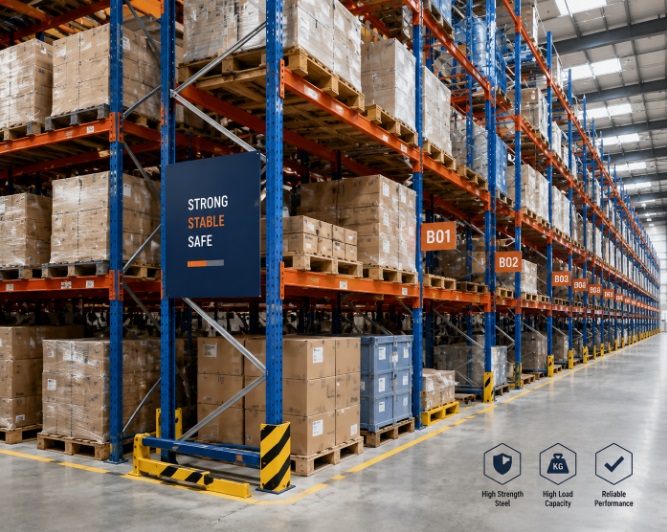
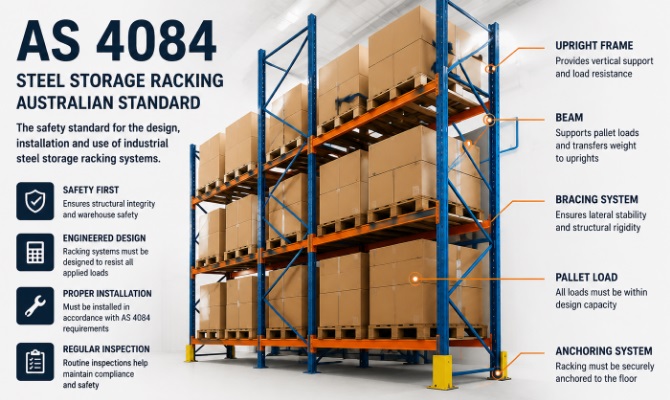
Pallet racking is designed for warehouses handling palletized and heavy loads. When properly engineered, installed, and anchored, pallet racking systems align well with OSHA safety expectations.
High-quality pallet racking systems:
-
Support heavy pallet loads safely
-
Maintain stability at greater heights
-
Allow safe forklift operation
-
Integrate safety accessories such as wire decking and rack protection
For large-scale warehouse storage, pallet racking remains one of the most reliable OSHA-aligned solutions.
Boltless Shelving for Light and Medium-Duty Applications
Boltless shelving is commonly used for cartons, tools, and manually handled goods. While easier to assemble, it must still meet OSHA requirements related to load limits and stability.
OSHA-compliant boltless shelving should:
-
Be assembled exactly as specified by the manufacturer
-
Display or clearly communicate load capacities
-
Remain level and undamaged
-
Be used only within its designed load range
Boltless shelving is ideal for picking areas, stockrooms, and back-of-house warehouse storage.
Wire Decking as a Safety Enhancement
Wire decking is a widely accepted safety upgrade for pallet racking systems. While OSHA does not explicitly require wire decking, it supports OSHA’s focus on preventing falling objects and improving load support.
Wire decking helps:
-
Prevent items from falling between beams
-
Improve fire sprinkler effectiveness
-
Distribute weight more evenly
-
Enhance overall rack safety
Adding wire decking is a practical step toward stronger OSHA alignment and improved warehouse safety.
Best Practices to Ensure OSHA-Compliant Warehouse Shelving
To maintain compliance and safety:
-
Select shelving systems designed for industrial use
-
Anchor and stabilize tall shelving
-
Clearly communicate load limits
-
Train employees on proper loading and storage
-
Conduct regular inspections and maintenance
Combining the right equipment with proper procedures is the most effective way to meet OSHA expectations.
OSHA Shelving Requirements Checklist
-
Shelving is stable and properly anchored
-
Load capacities are known and followed
-
Weight is evenly distributed
-
Shelving is installed per manufacturer guidelines
-
Damaged components are repaired or replaced
-
Aisles and exits remain clear
-
Regular inspections are documented
Does OSHA Apply to All Types of Warehouse Shelving?
Yes. OSHA requirements apply broadly to:
-
Pallet racking systems
-
Boltless shelving
-
Wire shelving
-
Mezzanine storage systems
While each system differs in design, OSHA’s core expectations—safety, stability, proper use, and maintenance—remain the same.
Conclusion: Building a Safer, OSHA-Compliant Warehouse
OSHA shelving requirements are not about restricting warehouse operations—they are about creating safer, more reliable storage environments. By choosing appropriate shelving systems, installing them correctly, and maintaining them over time, warehouses can reduce risk, protect workers, and operate more efficiently.
An OSHA-compliant warehouse is not only safer—it is also more productive and better prepared for long-term growth.
FAQ: OSHA Shelving Requirements for Warehouse Storage
Does OSHA require load capacity labels on shelving?
OSHA does not explicitly mandate labels in all cases, but load limits must be known and followed.
Are used shelving systems OSHA compliant?
Yes, as long as they are structurally sound, properly installed, and used within their rated capacity.
How often should warehouse shelving be inspected?
Inspections should be conducted regularly and whenever damage is suspected.
Can shelving be modified after installation?
Modifications can affect compliance and should be carefully evaluated before implementation.
-
-
PRODUCTS
-
NEWS
-
FOLLOW US
-


 link:
Spieth Medical
link:
Spieth Medical


 if you have questions or suggestions,please leave us a message,we will reply you as soon as we can



-

-
 +86 18006010205
 -
 +86 18006010205
 0
0