 [email protected]
 +86 18006010205
-


-
Warning: Undefined array key 2 in /home2/spiethlt/unracking.com/Templete/sps/Include/Function.php on line 372

-
Spieth, Space solutionsMore Than 18 Years Manufacturing & Exporting
-
 Tel : +86 18006010205
-
 E-mail : [email protected]
-
 Address : Tongan Park, Tongan District, Xiamen, China 361023
Bolt-On Guard Rail
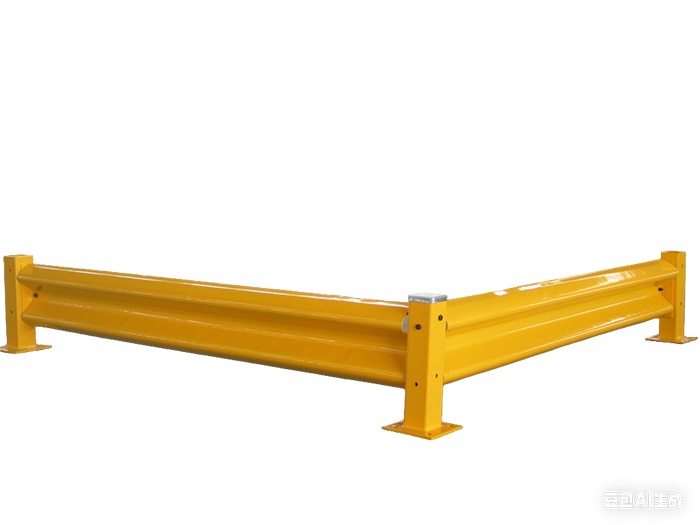

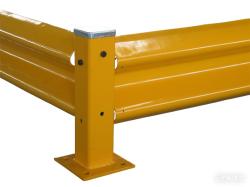
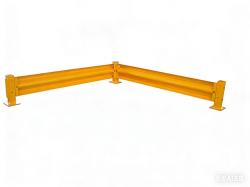

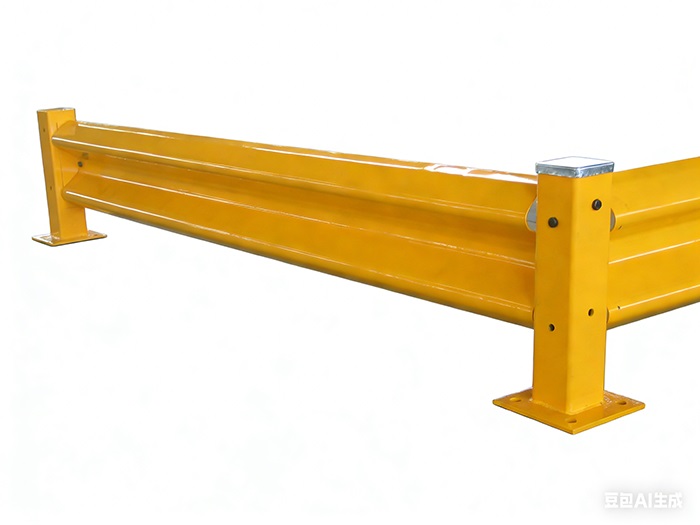
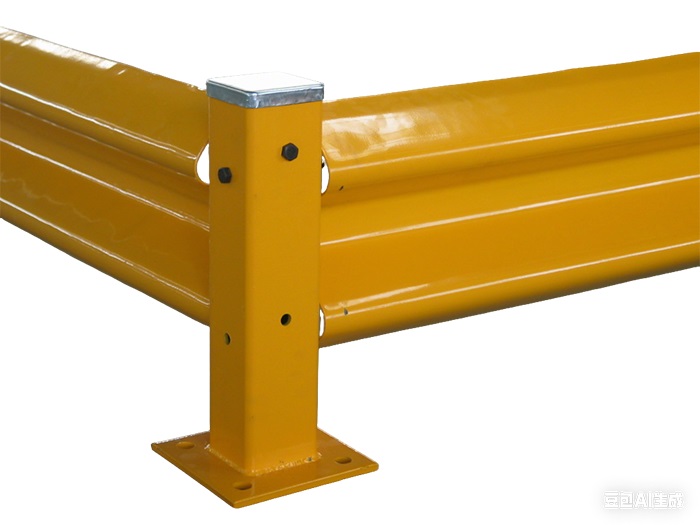
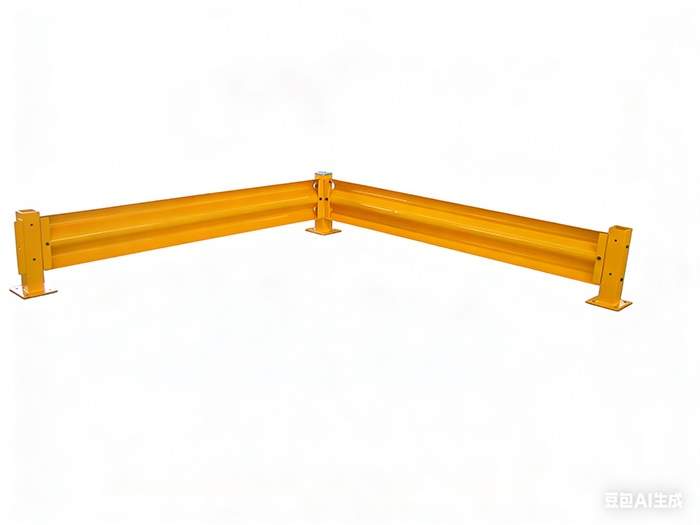
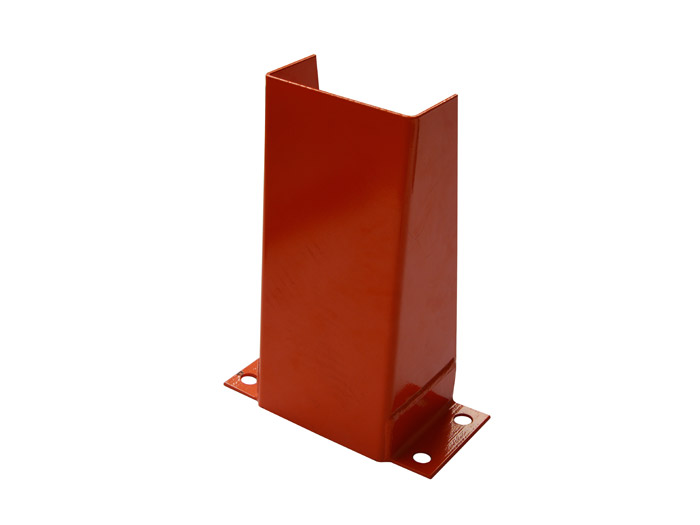
The Bolt-On Guard Rail provides reliable protection for pallet rack ends, aisles, and warehouse corners. Its heavy-duty steel structure and floor-mounted bolt-down design help reduce forklift impact damage and improve overall safety in busy warehouse environments.
Warehouse traffic is constantly increasing as forklifts move pallets, raw materials, and finished products throughout storage and production areas. While these operations improve efficiency, they also increase the risk of accidental impacts that can damage pallet racking, machinery, walls, and other critical infrastructure. Even low-speed forklift collisions may lead to costly repairs, interrupted operations, and unnecessary safety risks.
A Bolt-On Guard Rail provides a permanent physical barrier that separates vehicle traffic from valuable assets and pedestrian areas. Installed directly onto reinforced concrete floors with heavy-duty anchor bolts, it absorbs and distributes impact forces before they reach warehouse structures. Compared with temporary barriers or painted safety lines, bolt-on guard rails offer significantly greater durability and long-term protection in demanding industrial environments.
Designed for warehouses, logistics centers, manufacturing facilities, and distribution hubs, our guard rail systems are manufactured from structural steel and finished with a high-visibility powder coating to improve workplace safety while reducing maintenance costs. Standard configurations are available for common warehouse layouts, while custom dimensions and layouts can be produced for project-specific requirements.
Typical Protection Areas
- Pallet rack end protection in busy forklift aisles
- Loading dock entrances and staging zones
- Pedestrian walkways and employee safety areas
- Warehouse columns, building structures, and machinery
- Conveyor systems and automated production lines
- Inventory staging and shipping departments
Forklift accidents are among the most common causes of warehouse equipment damage. Although most impacts occur at relatively low speeds, repeated collisions can gradually weaken rack structures, damage building columns, deform machinery, and create unsafe working conditions. Preventing these incidents is usually far less expensive than repairing structural damage or dealing with operational downtime.
Unlike removable safety barriers, bolt-on guard rails become a permanent part of the warehouse protection system. Once securely anchored to the concrete floor, they create a strong protective boundary that helps absorb collision energy before it reaches valuable equipment. This not only protects physical assets but also improves traffic organization by clearly separating vehicle routes from pedestrian areas.
For companies investing in new warehouse facilities or upgrading existing operations, installing guard rails is often one of the simplest ways to reduce long-term maintenance costs while supporting a safer working environment. They are widely used in distribution centers, manufacturing plants, cold storage facilities, e-commerce warehouses, and logistics hubs where forklift traffic is continuous throughout the day.
Protect Warehouse Assets
Reduce accidental damage to pallet racking, equipment, walls, columns, and production lines exposed to frequent forklift traffic.
Improve Workplace Safety
Create clear separation between moving vehicles and pedestrian walkways to help minimize workplace accidents and improve overall site safety.
Lower Maintenance Costs
Prevent expensive structural repairs by absorbing everyday forklift impacts before they reach critical warehouse infrastructure.
Support Long-Term Operations
Heavy-duty steel construction and permanent floor anchoring provide reliable protection for facilities operating around the clock.
Unlike painted safety lines or lightweight barriers, a bolt-on guard rail is designed to absorb and redirect impact forces before they reach warehouse infrastructure. When a forklift accidentally strikes the rail, the impact is distributed through the steel rail, transferred into the support posts, and finally dispersed into the reinforced concrete floor through heavy-duty anchor bolts. This engineered load path helps reduce the stress applied to pallet racking, machinery, building columns, and other protected assets.
Because the system is permanently anchored instead of simply resting on the floor, it remains stable under repeated impacts and continues providing reliable protection throughout daily warehouse operations. Individual rails or posts can also be replaced if damaged, allowing maintenance to focus only on affected components instead of replacing an entire protection system.
- Forklift accidentally contacts the steel guard rail.
- The formed steel rail absorbs the initial impact energy.
- Steel posts transfer the remaining force downward.
- Heavy base plates distribute loads evenly across anchor points.
- Expansion anchors transfer impact into the reinforced concrete floor.
- The protected rack, equipment, or structural column experiences significantly lower impact forces.
This simple yet highly effective design makes bolt-on guard rails one of the most widely used warehouse safety solutions for protecting high-value assets without interfering with normal forklift traffic.
Heavy-Duty Structural Steel Construction
Manufactured from high-strength structural steel, the guard rail is engineered for demanding industrial environments where forklifts operate continuously. Its robust construction helps withstand repeated low-speed impacts while maintaining structural integrity over years of service. Compared with lightweight safety barriers, steel guard rails offer significantly greater durability and long-term reliability.
Permanent Floor-Mounted Installation
Each support post is securely anchored to reinforced concrete using heavy-duty expansion bolts, creating a stable protection system that resists movement during accidental impacts. This permanent installation method is ideal for warehouses, manufacturing facilities, distribution centers, and logistics hubs where fixed traffic protection is required.
Modular Design for Flexible Warehouse Layouts
The modular structure allows individual rails, posts, corners, and end sections to be combined into different configurations. Straight runs, L-shaped corners, U-shaped protection zones, and equipment barriers can all be created to match warehouse traffic patterns without redesigning the entire safety system.
High-Visibility Powder Coated Finish
A durable powder-coated surface provides excellent corrosion resistance while maintaining a bright safety-yellow appearance that remains highly visible to forklift operators. The finish is suitable for both indoor warehouse environments and other industrial applications where long-term durability and low maintenance are important.
Designed for Easy Maintenance
Warehouse protection systems inevitably experience occasional impacts over time. The modular design allows damaged rails or posts to be replaced individually, minimizing repair costs and reducing operational downtime. This approach extends the overall service life of the protection system while simplifying future maintenance.
Reduce Rack Repair Costs
Prevent accidental forklift impacts from damaging pallet racking uprights, reducing repair expenses and extending rack service life.
Protect Valuable Equipment
Create physical barriers around machinery, conveyors, electrical cabinets, and production equipment located near vehicle traffic.
Improve Traffic Management
Clearly define forklift travel routes and pedestrian walkways to support safer and more organized warehouse operations.
Lower Long-Term Operating Costs
Investing in permanent impact protection helps reduce maintenance frequency, equipment downtime, and unexpected repair costs over the lifetime of the facility.
Although bolt-on guard rails share the same basic purpose, selecting the right configuration depends on the layout of your facility, the type of vehicles in operation, and the level of impact protection required. Choosing a system based solely on price or appearance may result in insufficient protection or unnecessary installation costs. Evaluating your warehouse conditions before purchasing helps ensure the guard rail system performs effectively throughout its service life.
When planning a warehouse safety project, consider both current operating conditions and future expansion. Traffic patterns, forklift sizes, aisle widths, and equipment locations should all be taken into account before determining the appropriate guard rail layout.
Forklift Type & Traffic Frequency
Facilities operating large counterbalance forklifts or handling heavy pallet loads generally require stronger protection than warehouses using electric pallet trucks. Areas with frequent vehicle movement, such as loading docks and main travel aisles, typically benefit from heavier-duty guard rail systems.
Protection Area
Identify which assets require protection before selecting the layout. Guard rails can be installed around pallet racking, machinery, electrical equipment, building columns, conveyor systems, pedestrian walkways, or loading dock entrances depending on operational requirements.
Rail Length & Layout
Straight sections are suitable for protecting long warehouse aisles, while L-shaped or U-shaped layouts provide additional coverage around corners, equipment, and structural columns. Modular components allow future extensions without replacing the complete system.
Indoor or Outdoor Installation
Most powder-coated guard rails are designed for indoor industrial environments. For outdoor applications or areas exposed to moisture and corrosive conditions, additional surface treatments or galvanized finishes may be recommended to improve long-term durability.
Guard rails should not be positioned directly against pallet racking or machinery. Leaving an appropriate clearance allows the barrier to absorb impact energy before the protected structure is contacted, improving the overall effectiveness of the protection system.
Every warehouse operates under different traffic conditions, so bolt-on guard rails are commonly available in multiple sizes and configurations. Standard specifications meet the needs of most industrial facilities, while customized dimensions can be manufactured for project-specific applications.
|
Item |
Available Specification |
|
Material |
High-strength structural steel |
|
Surface Finish |
Industrial powder coating (Safety Yellow as standard) |
|
Installation Method |
Expansion anchor bolts fixed to reinforced concrete floor |
|
Available Rail Lengths |
1000 mm, 1500 mm, 2000 mm, 2500 mm, 3000 mm or custom |
|
Rail Height |
Various heights available according to project requirements |
|
Steel Thickness |
Customized according to required impact resistance |
|
Post Type |
Single post, corner post, end post, intermediate post |
|
Color Options |
Safety Yellow, Black, Orange, or customized powder-coated colors |
|
Application |
Warehouses, logistics centers, factories, cold storage, distribution centers |
|
OEM & ODM |
Available |
Because warehouse layouts vary significantly between facilities, custom dimensions, rail spacing, post locations, and protective configurations can be manufactured according to customer drawings or project requirements. Our engineering team can also recommend suitable layouts based on forklift traffic, warehouse dimensions, and the assets requiring protection.
Standard products are suitable for many warehouses, but industrial facilities often require protection systems that fit unique operating conditions. As a manufacturer, we provide flexible customization services to ensure each guard rail system integrates efficiently with the customer's warehouse layout and safety objectives.
- Custom rail lengths and protection heights
- Single, double, or multi-rail configurations
- Corner, end, T-shaped, and U-shaped layouts
- Custom powder-coated colors to match facility standards
- Higher impact resistance for heavy forklift operations
- OEM manufacturing based on customer drawings or technical specifications
Whether protecting a single warehouse aisle or designing a complete facility-wide traffic protection system, customized solutions help maximize both safety and long-term operational efficiency.
The long-term performance of a bolt-on guard rail depends not only on its design but also on the quality of the manufacturing process. Every production stage, from raw material preparation to final inspection, directly affects the system's strength, dimensional accuracy, and durability in demanding warehouse environments.
Our manufacturing process combines modern fabrication equipment with strict quality control procedures to ensure every component meets project requirements before shipment. Whether producing standard warehouse guard rails or customized protection systems, consistency and reliability remain our primary manufacturing objectives.
Raw Material Inspection
Production begins with carefully selected structural steel. Incoming materials are inspected for dimensions, surface condition, and mechanical consistency before entering the manufacturing process, helping ensure stable product quality from the very first stage.
Precision Steel Fabrication
Steel tubes, plates, and rails are processed using precision cutting, punching, and forming equipment to maintain accurate dimensions and ensure proper alignment during final assembly.
Professional Welding
Critical structural joints are welded according to established manufacturing procedures to achieve consistent strength and reliable structural performance. Finished welds are visually inspected before surface treatment begins.
Powder Coating Protection
After surface preparation, each component receives an industrial powder-coated finish that improves corrosion resistance while providing the high-visibility safety yellow appearance commonly used in warehouse safety systems.
- Incoming raw material inspection
- Dimensional verification during fabrication
- Welding quality inspection
- Surface coating appearance inspection
- Final assembly verification
- Packaging inspection before shipment
Before delivery, finished products are inspected to verify dimensions, coating quality, welding integrity, and overall appearance. This systematic quality control process helps ensure that every guard rail system arrives ready for installation and long-term industrial use.
Bolt-on guard rails are widely used wherever forklifts, pallet trucks, or industrial vehicles operate near valuable assets. By creating clearly defined protection zones, they help reduce accidental impact damage while improving overall warehouse safety and traffic organization.
Pallet Racking Protection
Warehouse rack ends are among the most vulnerable areas during forklift operation. Installing guard rails along aisle entrances helps reduce accidental impacts on rack uprights and minimizes the risk of structural damage caused by repeated vehicle contact.
Loading Dock Safety
Forklift traffic is often concentrated around loading docks where pallets are continuously loaded and unloaded. Guard rails help protect dock equipment, door frames, support columns, and nearby storage areas from accidental collisions.
Machine & Equipment Protection
Production machinery, conveyor systems, electrical cabinets, and automation equipment represent significant investments for industrial facilities. Installing guard rails around these assets provides an additional layer of protection without restricting normal production activities.
Pedestrian Walkways
Separating pedestrians from forklift traffic is an important part of warehouse safety planning. Guard rails create clearly defined walkways that help reduce the possibility of accidental vehicle and pedestrian interaction in busy operating areas.
Building Columns & Structural Protection
Structural columns are essential load-bearing components that should be protected from repeated forklift impacts. Installing guard rails around exposed columns helps reduce repair costs while protecting the overall integrity of the building structure.
Distribution & Logistics Centers
High-volume logistics facilities often operate continuously throughout the day with constant forklift movement. Bolt-on guard rail systems provide durable, long-term protection that supports safer material handling while reducing maintenance requirements across large warehouse operations.
Because every industry has different warehouse layouts and operational challenges, bolt-on guard rail systems can be configured to suit a wide variety of industrial applications. From manufacturing facilities to large distribution centers, customized protection layouts help improve operational safety while protecting valuable infrastructure.
Manufacturing Plants
Protect production equipment, assembly lines, tooling areas, and material storage zones from accidental forklift impacts.
Warehousing & Logistics
Improve traffic management while protecting pallet racking, loading docks, and warehouse infrastructure.
Cold Storage Facilities
Create reliable protection systems for refrigerated warehouses where forklift traffic remains frequent throughout daily operations.
E-commerce Fulfillment Centers
Support safer order fulfillment by separating high-speed material handling equipment from employee walkways and workstations.
Food & Beverage Distribution
Protect storage infrastructure and material handling routes within high-turnover warehouse environments.
Third-Party Logistics (3PL)
Flexible guard rail layouts help logistics providers adapt warehouse protection systems as customer operations continue to evolve.
A bolt-on guard rail performs most effectively when it is installed correctly and positioned according to warehouse traffic patterns. Before installation, evaluate forklift travel routes, turning areas, rack locations, and equipment that requires protection. Proper planning helps maximize impact resistance while minimizing interference with daily material handling operations.
Because every warehouse layout is different, guard rail spacing and configurations should be selected based on actual operational conditions rather than using a standard layout for every application. During project planning, consideration should also be given to future warehouse expansion so additional protection sections can be added if required.
Concrete Floor Condition
Install guard rails only on structurally sound reinforced concrete floors capable of supporting expansion anchors. Damaged or uneven concrete should be repaired before installation to maintain anchor performance.
Maintain Safety Clearance
Leave sufficient space between the guard rail and the protected equipment or pallet racking. This clearance allows the barrier to absorb impact energy before contact occurs.
Protect High-Risk Areas First
Priority should be given to rack ends, loading docks, intersections, building columns, machinery, and other locations with frequent forklift turning movements.
Follow Anchor Installation Guidelines
Use the specified anchor size and installation depth to achieve reliable structural performance. All anchor bolts should be tightened according to the manufacturer's recommended torque values.
The most effective warehouse safety systems are planned before installation begins. Reviewing traffic flow, forklift turning radius, rack layouts, and pedestrian routes helps create a protection system that improves both safety and operational efficiency.
Although bolt-on guard rails are designed for long-term industrial use, regular inspections help maintain their protective performance throughout years of operation. Warehouses with frequent forklift traffic should include guard rail inspections as part of their routine facility maintenance program.
After any significant impact, affected components should be inspected before the area returns to normal operation. Replacing damaged sections promptly helps maintain the effectiveness of the entire protection system while preventing minor damage from developing into larger structural issues.
Inspect Anchor Bolts
Check anchor bolts regularly to ensure they remain securely fastened and free from corrosion or movement caused by repeated impacts.
Check Rails & Posts
Look for signs of bending, cracking, deformation, or excessive wear that could reduce the ability of the system to absorb future impacts.
Examine Surface Finish
Inspect powder-coated surfaces for scratches or coating damage. Minor repairs help maintain corrosion resistance and extend product life.
Replace Damaged Components
Because of the modular design, individual rails or posts can typically be replaced without removing the complete guard rail system, reducing maintenance costs and downtime.
- Monthly visual inspections in normal warehouse operations.
- Weekly inspections in areas with intensive forklift traffic.
- Immediate inspection after any significant collision.
- Annual review of the complete warehouse protection system.
Selecting a warehouse protection system involves more than comparing product specifications. Consistent manufacturing quality, engineering support, and reliable delivery are equally important when planning long-term warehouse safety improvements. As an experienced industrial storage equipment manufacturer, Spieth provides bolt-on guard rail solutions designed to meet the practical requirements of warehouses, manufacturing plants, and logistics facilities worldwide.
Professional Manufacturing Experience
Our team has extensive experience producing industrial storage and warehouse safety equipment for a wide range of commercial and industrial applications.
Flexible OEM & ODM Services
Custom dimensions, layouts, colors, and structural configurations can be manufactured according to project drawings or specific warehouse requirements.
Engineering Support
From layout recommendations to product selection, our engineering team assists customers in choosing practical protection solutions for different warehouse environments.
Strict Manufacturing Quality Control
Every production stage is monitored to help ensure consistent dimensions, reliable welding quality, durable surface finishing, and dependable overall product performance.
Export Project Experience
Our products have been supplied to customers in multiple international markets, supporting warehouse projects across manufacturing, logistics, retail, and distribution industries.
Responsive Customer Service
From quotation to shipment, our sales and technical teams work closely with customers to provide timely communication and efficient project support.
Our goal is to help customers build safer and more efficient warehouse environments by providing practical protection solutions, dependable manufacturing quality, and professional technical support throughout every stage of the project.
What is the purpose of a bolt-on guard rail?
Bolt-on guard rails are designed to protect warehouse infrastructure from accidental forklift impacts. They create a physical barrier around pallet racking, machinery, building columns, loading docks, and pedestrian walkways, helping reduce repair costs while improving workplace safety.
Where are bolt-on guard rails commonly installed?
They are typically installed at pallet rack ends, warehouse aisles, loading dock entrances, machinery protection zones, building columns, conveyor systems, and other locations where forklift traffic is frequent.
Can the guard rails be customized?
Yes. Rail lengths, post spacing, protection layouts, colors, and structural configurations can all be customized to match your warehouse layout and operational requirements.
Are bolt-on guard rails suitable for outdoor use?
Standard powder-coated systems are generally intended for indoor industrial environments. For outdoor installations or corrosive environments, galvanized or other protective surface treatments can be provided upon request.
Can damaged sections be replaced individually?
Yes. Because the system uses a modular design, damaged rails or posts can usually be replaced separately without removing the entire guard rail system, reducing maintenance costs and downtime.
What type of floor is required?
Bolt-on guard rails should be installed on reinforced concrete floors capable of securely supporting heavy-duty expansion anchors. Proper installation is essential for achieving the designed level of protection.
How do I determine the correct guard rail layout?
The ideal layout depends on forklift traffic, aisle width, equipment locations, and the assets that require protection. Our engineering team can recommend suitable configurations based on your warehouse drawings or project information.
What industries use bolt-on guard rail systems?
They are widely used in manufacturing plants, warehouses, logistics centers, cold storage facilities, retail distribution centers, e-commerce fulfillment operations, and many other industrial environments.
Do you provide OEM manufacturing services?
Yes. We support OEM and customized manufacturing for distributors, warehouse equipment suppliers, and project contractors, including customized dimensions, colors, and branding when required.
Can you help with large warehouse projects?
Yes. For large-scale warehouse installations, we can provide product recommendations, layout suggestions, and customized manufacturing solutions based on your project requirements.
Providing a few basic project details allows our engineering and sales teams to recommend a guard rail solution that fits your facility more accurately. Whether your project involves a single warehouse aisle or a complete logistics center, we can assist with product selection and customized manufacturing.
① Share Your Project
Tell us what needs protection, such as pallet racking, machinery, loading docks, building columns, or pedestrian walkways.
② Provide Basic Information
If available, send warehouse drawings, approximate dimensions, forklift types, or photos of the installation area.
③ Receive a Recommendation
Our team will recommend suitable guard rail configurations, dimensions, and optional customization based on your project requirements.
④ Production & Delivery
After confirming specifications, production is scheduled according to the approved drawings and agreed delivery timeline.
Every warehouse has different traffic patterns, equipment layouts, and safety requirements. Choosing the right guard rail system involves more than selecting a standard product—it requires a solution that fits the way your facility operates.
Whether you need protection for pallet racking, loading docks, production equipment, structural columns, or complete warehouse traffic routes, our team can help develop a practical solution based on your operational needs. From standard products to fully customized guard rail systems, we support projects of various sizes with dependable manufacturing and responsive technical assistance.
If you are planning a new warehouse, expanding an existing facility, or upgrading your current safety protection system, feel free to contact us to discuss your project. We will be pleased to recommend suitable configurations and provide a quotation based on your specific requirements.
-
Do you offer samples available?Yes, samples are available. Sample lead time 3-5days generally.
-
Do you offer custom design?Custom design is surely available. we have very rich experience in customizing shelves.
-
What is the term of payment?Regularly, 30percentTT in advance,70percent against the copy of B/L.
-
What is your delivery time?Usually: 1*20' GP container, around 15 days; 1*40'GP container, around 20days; For some urgent orders,will adjust as your requirement accordingly.
-
Are you manufacturer or trading company?We are manufacturer. Our factory has been specializing in warehouse storage equipments for years. We warmly welcome you to visit our factory at anytime.


-
-
PRODUCTS
-
NEWS
-
Why Spieth Butterfly Shelving Stands Out
16 JUL 2026
-
Standard Pallet Rack Dimensions: Size & Capacity Guide
14 JUL 2026
-
How to Choose Wire Cages for Bottle Storage
13 JUL 2026
-
Why Spieth Butterfly Shelving Stands Out
-
FOLLOW US
-


 link:
Spieth Medical
link:
Spieth Medical


 if you have questions or suggestions,please leave us a message,we will reply you as soon as we can



-

-
 +86 18006010205
 -
 +86 18006010205
 0
0