 [email protected]
 +86 18006010205
-


-
Warning: Undefined array key 2 in /home2/spiethlt/unracking.com/Templete/sps/Include/Function.php on line 372

-
Spieth, Space solutionsMore Than 18 Years Manufacturing & Exporting
CATEGORIES
NEW PRODUCTS
CONTACT US
-
 Tel : +86 18006010205
-
 E-mail : [email protected]
-
 Address : Tongan Park, Tongan District, Xiamen, China 361023
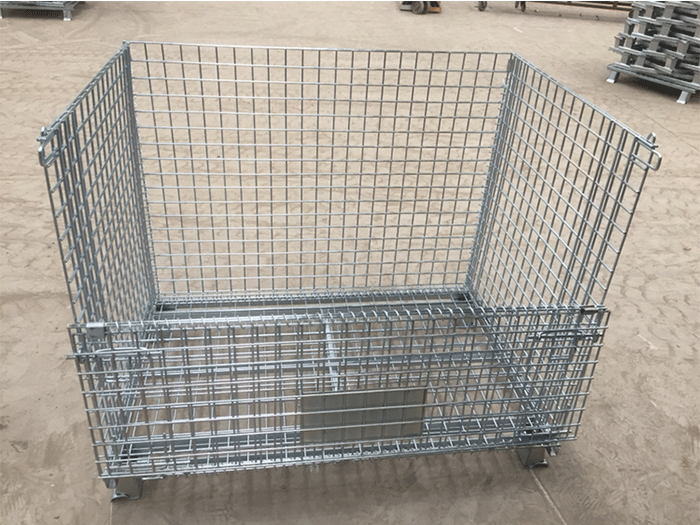
Large Metal Wire Mesh Storage Containers
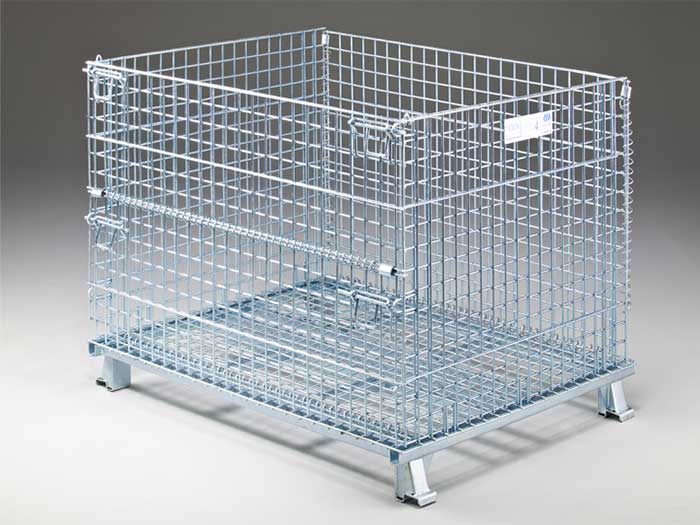

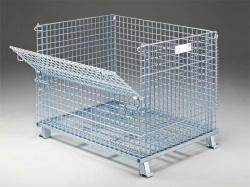
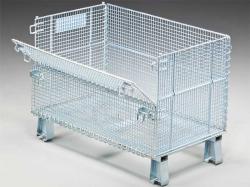

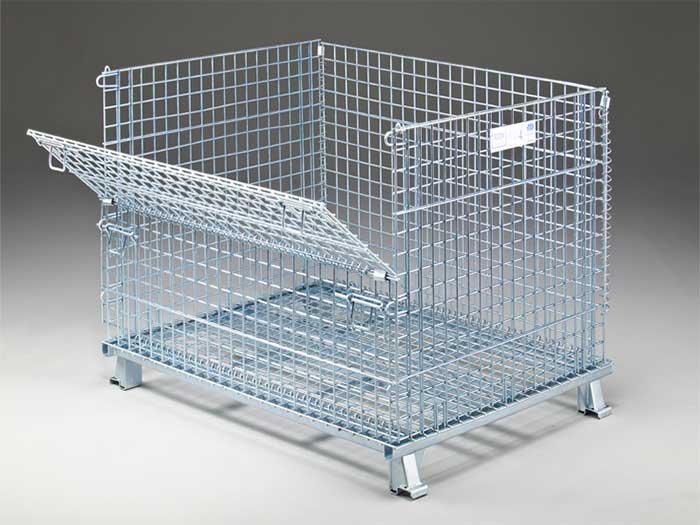
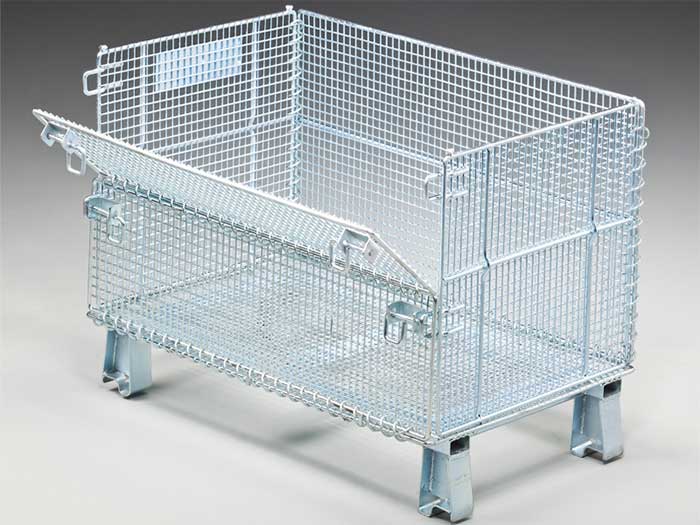
item No: sps-wc0217
●Visible view of the product inside the container
●Open wire mesh design
●Long service life
●Recyclable
●Stackable and collapsible to save space
●Lightweight or heavyweight options
DESCRIPTION
Packaging & Shipping
FAQ
Spieth wire mesh containers are reusable steel material handling units engineered for industrial logistics environments where durability, stackability, and space efficiency are required.
They are widely deployed in warehouse distribution systems, manufacturing plants, and closed-loop supply chains.
Each container is designed based on standardized pallet dimensions to ensure compatibility with global warehouse handling systems.
Each container is designed based on standardized pallet dimensions to ensure compatibility with global warehouse handling systems.
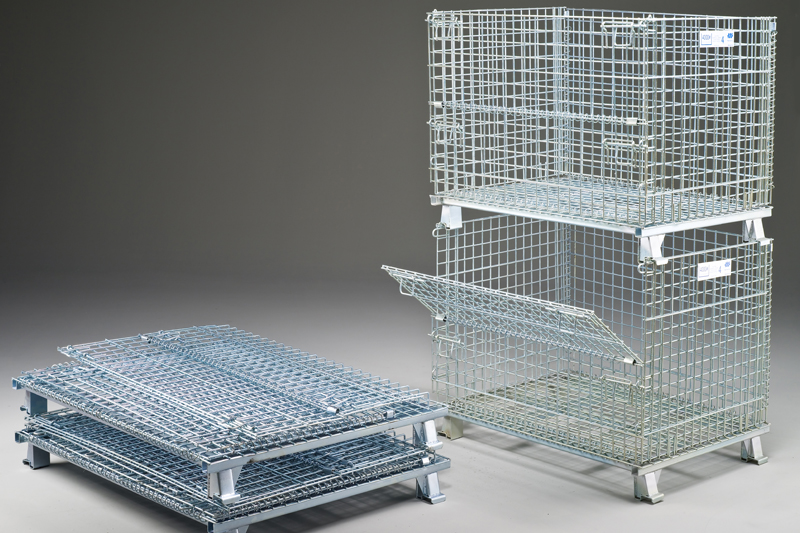
Product Definition & Engineering Scope
• Category: Foldable wire mesh storage container (industrial reusable type)
• Function: Bulk material storage, return logistics optimization, warehouse circulation
• Handling system: Forklift, pallet jack, automated warehouse transfer systems
• Design principle: Space reduction during empty return transport
• Structural standard: Reinforced welded steel frame architecture
Material Engineering & Surface Treatment
• Base material: Low-carbon steel wire (industrial grade Q235 equivalent)
• Wire forming process: Cold-drawn steel wire with precision welding joints
• Welding type: Full penetration resistance welding for structural integrity
• Surface coating: Hot-dip galvanizing (anti-rust industrial standard)
• Corrosion resistance: Suitable for humid warehouse environments
Structural System Breakdown
• Side panels: Reinforced welded mesh grids for load containment
• Base frame: U-channel steel skid structure for forklift entry
• Folding system: Hinged collapsible mechanism for return logistics
• Corner posts: Vertical stacking reinforcement columns
• Locking system: Mechanical locking points for stacked stability
Performance Parameters & Load Behavior
• Static load capacity: 800–1500 kg depending on configuration and wire gauge
• Dynamic handling: Designed for repeated forklift lifting cycles in warehouse environments
• Stack performance: 3–4 layers under evenly distributed load conditions
• Load distribution principle: Mesh structure distributes pressure across frame joints
• Operational cycle: Suitable for high-frequency reuse in logistics circulation systems
Operational Constraints & Safety Conditions
• Designed for dry, non-corrosive industrial environments
• Not recommended for chemical storage or liquid containment applications
• Stack height must be adjusted based on load distribution and floor flatness
• Forklift handling requires balanced entry from base skid channels
• Dynamic stacking is not recommended during transport movement
Industrial Standards & Manufacturing Practices
• Production system aligned with ISO 9001 quality management principles
• Welding inspection follows industrial structural steel joint standards
• Surface treatment follows hot-dip galvanizing anti-corrosion industrial benchmarks
• Load testing conducted under static and stacking simulation conditions
• Manufacturing consistency controlled via batch-level quality inspection process
Logistics System Integration Logic
• Compatible with palletized warehouse storage systems (EUR/US pallet standards)
• Optimized for return logistics reduction through foldable structure design
• Supports manual and mechanical handling workflows
• Designed for integration into standardized warehouse circulation loops
• Suitable for centralized distribution and multi-location inventory systems
Packaging & Shipping:
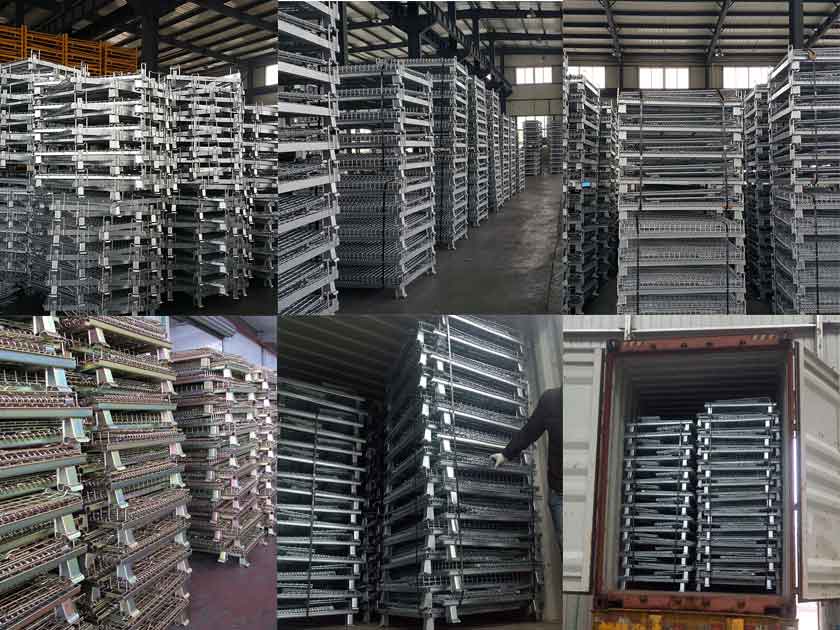
-
Do you offer samples available?Yes, samples are available. Sample lead time 3-5days generally.
-
Do you offer custom design?Custom design is surely available. we have very rich experience in customizing shelves.
-
What is the term of payment?Regularly, 30percentTT in advance,70percent against the copy of B/L.
-
What is your delivery time?Usually: 1*20' GP container, around 15 days; 1*40'GP container, around 20days; For some urgent orders,will adjust as your requirement accordingly.
-
Are you manufacturer or trading company?We are manufacturer. Our factory has been specializing in warehouse storage equipments for years. We warmly welcome you to visit our factory at anytime.
RELATED TAGS:
Send Message
if you have questions or suggestions,please leave us a message,we will reply you as soon as we can!
Subject: Large Metal Wire Mesh Storage Containers
RELATED PRODUCTS

-
-
PRODUCTS
-
NEWS
-
Split vs Solid Posts in Boltless Rivet Shelving
22 JUL 2026
-
Understanding Pallet Rack Load Capacity
21 JUL 2026
-
Why Spieth Butterfly Shelving Stands Out
16 JUL 2026
-
Split vs Solid Posts in Boltless Rivet Shelving
-
FOLLOW US
-


 link:
Spieth Medical
link:
Spieth Medical


Send Message
 if you have questions or suggestions,please leave us a message,we will reply you as soon as we can



ONLINE SERVICE
-

-
 +86 18006010205
 -
 +86 18006010205
 0
0
Browsing History