 [email protected]
 +86 18006010205



-
Spieth, Space solutionsMore Than 18 Years Manufacturing & Exporting
-
 Time:7/10/2026
 -
 Time:7/6/2026

-
 Tel : +86 18006010205
-
 E-mail : [email protected]
-
 Address : Tongan Park, Tongan District, Xiamen, China 361023
What Is VNA Pallet Racking? Benefits & Aisle Width Guide
 Time:3/27/2026
 215
215Rising warehouse rents, limited floor space, and growing inventory are common pain points for modern distribution centers. When your business is expanding but your facility cannot be extended, maximizing storage density without sacrificing accessibility becomes your top priority.
This is exactly where VNA (Very Narrow Aisle) pallet racking becomes a game-changing solution. By drastically narrowing aisle widths and utilizing vertical height efficiently, VNA systems help warehouses store more pallets while keeping full, direct access to every unit load.
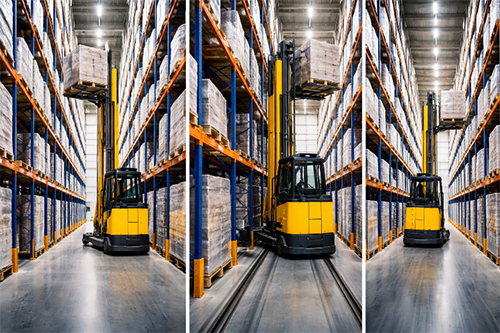
What Is VNA Pallet Racking?
VNA pallet racking is a high-density industrial storage system engineered for extremely narrow operating aisles, typically ranging from 1.6m to 2.0m. Unlike conventional rack setups, it relies on specialized material handling equipment for safe and efficient operation.
One of its greatest advantages is that it retains 100% direct access to every pallet, unlike drive-in or push-back systems that sacrifice selectivity for density. This makes VNA ideal for warehouses with high SKU diversity, fast turnover, and frequent picking operations.
- Aisle width: 1.6–2.0 meters
- Height range: 6m up to 18m and higher
- Recommended equipment: Turret trucks / trilateral VNA forklifts
- Pallet accessibility: 100% direct access
- Best for: High-SKU warehouses, distribution centers, cold storage
VNA Aisle Width Explained
The core characteristic of VNA racking is its dramatically reduced aisle width. While traditional selective racking requires aisles of 2.5–3.5 meters, VNA systems cut this down to just 1.6 meters in optimized designs.
This space-saving performance is achieved through:
- Guide rails or floor-mounted guidance systems
- Wire guidance or laser navigation for forklifts
- High-precision maneuvering of specialized VNA trucks
- Elimination of excess turning space in working aisles
With controlled vehicle paths, warehouses can minimize rack spacing while maintaining high safety standards and operational stability.
Key Benefits of VNA Pallet Racking
1. Maximum Cubic Space Utilization
By narrowing aisles and extending rack height, VNA systems transform wasted horizontal space into usable storage locations, significantly improving overall cubic efficiency.
2. Uncompromised Pallet Selectivity
Unlike other high-density systems, VNA maintains full access to every pallet, supporting faster picking, replenishment, and inventory rotation—critical for high-SKU and e-commerce operations.
3. Enhanced Operational Safety
Guided forklift movement reduces human error, minimizes rack collisions, and creates a more predictable, secure working environment for operators.
4. Strong Long-Term ROI & Cost Savings
Although upfront investment is higher than standard racking, the added storage capacity delays or eliminates costly warehouse expansion, relocation, and rental expenses, delivering excellent long-term returns.
VNA vs Selective Racking: Full Comparison
| Feature | VNA Racking | Standard Selective Racking |
|---|---|---|
| Storage Density | High – Up to 40% more capacity | Medium – Basic space utilization |
| Aisle Width | 1.6–2.0m | 2.5–3.5m |
| Pallet Accessibility | 100% direct access | 100% direct access |
| Equipment Requirements | Specialized VNA / turret trucks | Standard counterbalance forklifts |
| Initial Investment | Higher | Lower |
| Best Suited For | High SKU, limited space, fast-moving goods | General storage, low-investment facilities |
When Should You Use VNA Racking?
Ideal Applications & Scenarios:
- Warehouses with high SKU counts and diverse inventory
- Facilities where land or rental costs are extremely high
- High-frequency order picking and distribution centers
- E-commerce, third-party logistics (3PL), and retail warehouses
- Cold storage and controlled-temperature facilities
- Warehouses with sufficient ceiling height (6m+)
When VNA May Not Be the Best Choice:
- Facilities with low ceiling height and limited vertical space
- Slow-moving inventory with minimal picking activity
- Operations with severe budget constraints for equipment
- Temporary warehouses requiring quick, low-cost installation
Top Industries Using VNA Racking
- E-commerce & Retail Distribution: Fast, direct picking for high-volume orders
- Cold Storage & Freezer Warehouses: Narrow aisles reduce energy loss and lower cooling costs
- Manufacturing & Production: Organized storage for raw materials, components, and finished goods
- Pharmaceutical & Healthcare: Clean, controlled, fully accessible inventory management
- Third-Party Logistics (3PL): Maximizing storage density to serve multiple clients efficiently
FAQ About VNA Pallet Racking
What is the minimum aisle width for VNA racking?
The minimum practical aisle width is typically 1.6 meters, depending on forklift model, load size, and system design. Most projects range between 1.6m and 2.0m.
What type of forklift is used for VNA warehouses?
VNA systems use specialized equipment such as turret trucks or trilateral forklifts, which can lift, rotate, and place loads without turning in the aisle.
Is VNA racking more expensive than standard racking?
Initial material and equipment costs are higher, but the 40% increase in storage capacity delivers strong ROI by avoiding expensive warehouse expansion or relocation.
Does VNA require floor flatness or guidance systems?
Most VNA installations use floor guide rails or wire guidance to ensure precision. Higher-level systems may use laser navigation for automated or semi-automated operation.
How long is the ROI period for VNA racking?
For most warehouses facing space shortages, the ROI period is typically 2–4 years, depending on rent costs, expansion expenses, and operational efficiency gains.
Maximize Your Warehouse Space with a Custom VNA Solution
Struggling with limited storage? Get a professional layout design, capacity calculation, and ROI analysis tailored to your facility.
Get Your Free VNA Consultation & Layout Proposal-
-
PRODUCTS
-
NEWS
-
FOLLOW US
-


 link:
Spieth Medical
link:
Spieth Medical


 if you have questions or suggestions,please leave us a message,we will reply you as soon as we can



-

-
 +86 18006010205
 -
 +86 18006010205
 0
0