 [email protected]
 +86 18006010205



-
Spieth, Space solutionsMore Than 18 Years Manufacturing & Exporting
-
 Time:6/24/2026
 -
 Time:6/23/2026
-
 Tel : +86 18006010205
-
 E-mail : [email protected]
-
 Address : Tongan Park, Tongan District, Xiamen, China 361023
Why Are Shelves Called Gondolas
 Time:2/5/2026
 613
613
If you work in supermarket or retail store projects, you have probably heard the term “gondola shelving” many times.
But a common question from buyers and project planners is: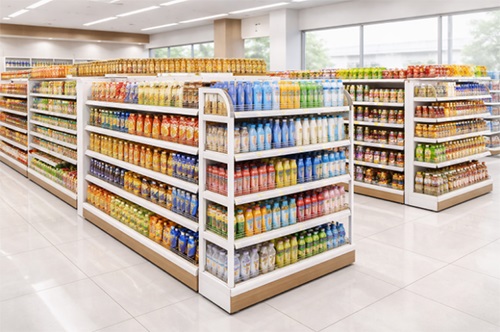
Why are shelves called gondolas?
This article explains the origin of the term, what gondola shelving really means in today’s retail industry, and why understanding this concept helps buyers plan more efficient and flexible store layouts.
What Does “Gondola Shelving” Mean in Retail?
In modern retail environments, gondola shelving refers to a modular, steel-based display system used to present merchandise in an organized and accessible way.
A typical gondola shelving system is built around:
- vertical uprights,
- a structural base shelf,
- adjustable display shelves, and
- various back panels and merchandising accessories.
Unlike simple wall shelves, gondola shelving is designed as a complete system that allows retailers to easily change shelf heights, add accessories, and reconfigure layouts as product assortments evolve.
In other words, “gondola” does not describe a single shelf.
It describes an entire retail display structure.
Where Did the Term “Gondola” Come From?
The word gondola originally refers to the long, narrow boats traditionally used in Venice.
Over time, the term began to be used in different industries to describe long, narrow, and elongated structures that support people or goods in a balanced and stable way.
When modern self-service retail stores began developing standardized shelving systems, the industry adopted the word “gondola” to describe freestanding display structures that visually and functionally resembled this long, continuous form.
Why Are Store Shelves Specifically Called “Gondolas”?
The name “gondola shelving” comes from both visual form and functional design.
A gondola shelving unit typically:
- runs in a straight, continuous line,
- stands independently on the sales floor,
- supports products on both sides (in many cases), and
- forms a central aisle structure inside the store.
This is very different from traditional wall-mounted shelves.
The freestanding, elongated structure of these display systems is what led the retail industry to adopt the term “gondola”.
So, shelves are called gondolas not because of any decorative theme, but because of how the system is physically structured and how it functions within store layouts.
What Makes Gondola Shelving Different from Other Store Shelving?
Gondola shelving vs wall shelving
Wall shelving is fixed against the store perimeter and is usually single-sided.
Gondola shelving, especially island gondolas, is placed in the center of the sales floor and supports double-sided product display.
Gondola shelving vs warehouse racking
Warehouse racking systems are designed primarily for storage and palletized loads.
Gondola shelving is designed for:
- customer accessibility,
- visual merchandising, and
- frequent product replenishment.
Although both systems use steel structures, their engineering purpose and design priorities are completely different.
Typical Types of Gondola Shelving in Modern Stores
Wall gondola shelving
Installed along perimeter walls, wall gondolas are single-sided and commonly used for lighter and medium-weight products.
Island (double-sided) gondola shelving
Island gondolas are placed in store aisles and allow merchandise to be displayed on both sides.
This configuration is the most recognizable form of gondola shelving in supermarkets and large retail stores.
End cap displays
End caps are positioned at the ends of gondola runs and are typically used for promotions, seasonal products, and high-turnover items.
These three configurations form the foundation of most modern retail floor layouts.
How Gondola Shelving Evolved in Modern Retail Design
Early retail shelving focused mainly on basic storage and product presentation.
As self-service retail formats expanded, gondola shelving systems evolved to support:
- adjustable shelf spacing,
- merchandising accessories such as hooks and dividers,
- different back panel options such as solid panels, pegboards, and wire backs, and
- coordinated visual layouts across entire store networks.
Today, gondola shelving is no longer just a shelf system.
It plays a direct role in:
- customer flow design,
- product visibility, and
- category management strategies.
Does “Gondola Shelving” Mean a Specific Brand?
No.
Gondola shelving is a product category, not a brand.
Some well-known manufacturers have their own branded gondola systems, but the term itself refers to the general retail shelving concept.
From a buyer’s perspective, this distinction is important.
When a project specifies “gondola shelving,” it usually describes:
- the system structure,
- functional requirements, and
- layout configuration,
not a mandatory brand.
Why the Term “Gondola” Is Still Used Today in Retail Projects
The term remains widely used because it provides a clear and standardized way for:
- store designers,
- fixture suppliers, and
- project contractors
to communicate layout intent and display structure.
In international retail projects, using the term “gondola shelving” helps avoid confusion between:
- retail display systems and
- warehouse or industrial storage solutions.
It has become a universal industry language for store fixture planning.
How Understanding Gondola Shelving Helps Buyers Plan Better Store Layouts
For project buyers and retail developers, understanding what gondola shelving really means supports better decisions in several areas:
- aisle width planning,
- customer circulation design,
- merchandise density control, and
- future layout reconfiguration.
Because gondola systems are modular, they allow retailers to adjust store layouts without replacing the entire fixture infrastructure.
This is especially valuable for:
- store renovation projects, and
- category mix changes over time.
Branded Gondola Shelving vs Custom Gondola Shelving Systems
When selecting a gondola shelving solution, buyers often compare branded systems with custom-manufactured solutions.
The main differences usually appear in:
Layout flexibility
Custom systems can be engineered to match irregular floor plans and specific store concepts.
Design and finish options
Custom production allows better alignment with brand identity and interior design requirements.
Lead time and project coordination
For international and multi-store projects, manufacturing schedules and logistics flexibility become critical.
Cost control for large rollouts
Custom supply models can offer better cost efficiency when multiple stores are deployed simultaneously.
When a Custom Gondola Shelving Manufacturer Is a Better Choice
A custom gondola shelving manufacturer is often more suitable for:
- new supermarket opening projects,
- chain store expansion programs,
- Middle East and overseas retail developments,
- stores with non-standard architectural layouts, and
- projects with strict delivery and budget targets.
In these scenarios, production flexibility and project coordination usually have greater impact than standardized catalog configurations.
FAQs About Why Shelves Are Called Gondolas
Why are supermarket shelves called gondolas?
Because most supermarket display systems are freestanding, modular structures placed in aisles.
This form matches the traditional gondola shelving concept used in retail design.
Is gondola shelving only used in supermarkets?
No.
Gondola shelving is widely used in convenience stores, pharmacies, specialty retail stores, and other self-service retail formats.
Is gondola shelving the same as retail racks?
Not exactly.
Retail racks can refer to various display fixtures.
Gondola shelving specifically refers to a modular upright-and-shelf system designed for flexible store layouts.
Can gondola shelving be customized?
Yes.
Shelf depth, height, finish, back panels, and structural configuration can be customized to meet project-specific requirements.
Final Thoughts: Why the Name “Gondola Shelving” Still Matters in Retail
The reason shelves are called gondolas lies in the structural and functional design of modern retail display systems.
Gondola shelving represents:
- a freestanding,
- modular,
- and highly adaptable display solution
that supports efficient merchandising and store layout planning.
For today’s retail buyers, understanding the meaning behind the term helps clarify technical requirements, compare suppliers more accurately, and select the most suitable shelving system for both current operations and future expansion.
-
-
PRODUCTS
-
NEWS
-
FOLLOW US
-


 link:
Spieth Medical
link:
Spieth Medical


 if you have questions or suggestions,please leave us a message,we will reply you as soon as we can



-

-
 +86 18006010205
 -
 +86 18006010205
 0
0